Loading drawing…
Loading drawing…
Easy way:
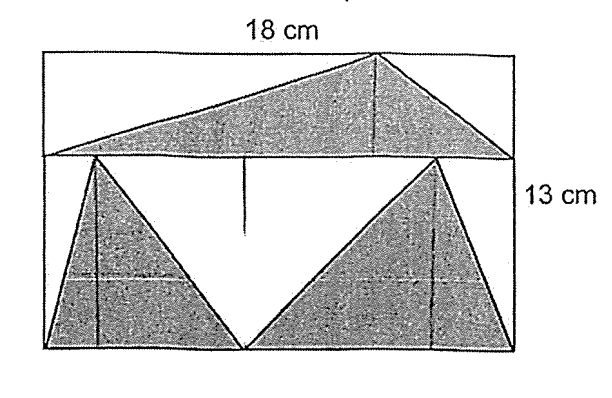
area of the rectangle ÷ 2 → (18 x 13) ÷ 2 = 234 ÷ 2 = 117 cm²
Another way
Let's say Triangle A height is 3cm Let's say Triangle B and C height is 10cm Let's say Triangle B base is 8cm Let's say Triangle C base is 10cm
*All of this length and height adds correctly to the length and bread of the rectangle
Triangle A → 1/2 x base x height = 1/2 x 18 x 3 = 9 x 3 = 27 cm²
Triangle B → 1/2 x base x height = 1/2 x 8 x 10 = 4 x 10 = 40 cm²
Triangle C → 1/2 x base x height = 1/2 x 10 x 10 = 5 x 10 = 50 cm²
Total shaded area → 50 + 40 + 27 = 90 + 27 = 117 cm²
Unshaded area → rectangle area - shaded area = 234 - 117 = 117
If the triangle/s base (whether single or many triangles) adds to the length of the rectangle, then the area will always be half of the rectangle